Data-powered outdoor gear advisor
The story behind the research, the people who shaped it, and every design decision that came out of it.
Role & Context
Role
Sole designer and builder — user research, product design, schema design, and AI-assisted engineering
Context
Senior capstone, 2026
Tools
Claude (AI gear-list generation via tool use), Vercel, OpenWeather, Open-Meteo, Google Maps/Places, SerpAPI, Figma
Section 01
Every year, thousands of people head outdoors for the first time — and most show up underprepared. Not because they didn't research. Because the information they found was built for someone who already knows.
REI's gear pages assume you know what a sleeping bag's temperature rating means for your elevation in October. Reddit threads assume you know which questions to ask. YouTube reviews assume you have $800 to spend. So beginners overbuy what they don't need, underbuy what they do, or give up and wing it. All three lead to bad trips.
Three root causes sit underneath it:
Pain Point 01
Generic gear lists don't account for where you're actually going. A "hiking checklist" won't tell you desert nights in October drop to 35°F, or that a Pacific Northwest trail in June makes rain gear non-negotiable. Beginners don't know what they don't know — and the internet doesn't tell them until it's too late.
Pain Point 02
Walking into REI as a beginner is overwhelming. $600 tents. $200 sleeping bags. Reviews that never mention a budget. First-timers overbuy because they can't tell which items matter most — or they check out entirely because the entry price feels impossible.
Pain Point 03
There's no shortage of gear content. There's a shortage of gear content relevant to a specific beginner on a specific trip. Assembling an answer for your exact situation takes hours and still leaves gaps.
Section 02
To move past assumptions, I ran a structured research session with the Ladies Climbing Coalition — a community of women climbers at every level, from complete beginners to multi-year veterans. Real beginners, not classmates: people who remember the confusion, the wrong gear, and the moments where better information would have changed everything.
Group
Ladies Climbing Coalition
Format
2 activities, 1 session
Methods
REI Roleplay · Affinity Board
Activity 01
Each participant drew one of six scenario cards and played an experienced REI employee advising a beginner about a specific trip. They had to think through: what would a beginner most likely forget? What would actually hurt them? What's the first thing you'd hand them? The exercise forced people to externalize expert knowledge they'd internalized — and showed exactly which gaps were universal versus trip-specific.
Scenario 01
Desert camping weekend, first time sleeping outdoors
Scenario 02
Winter day hike, Pacific Northwest, November
Scenario 03
3-day backpacking trip, Sierra Nevada, June
Scenario 04
Beginner rock climbing, Joshua Tree, spring
Scenario 05
Family car camping, budget under $200 total
Scenario 06
Solo overnight hike, total beginner, no gear owned
Activity 02
Afterward, each person wrote individual observations and "I wish I'd known" moments on sticky notes — one idea per note — and we grouped them as a room, letting themes surface from the bottom up. Three clusters formed almost immediately: condition surprises (weather and terrain caught people off guard), gear paralysis (too many options, no starting point), and specificity gaps (generic advice didn't match the real trip). Those three clusters became the foundation for everything GearSmart does.
Section 03
Not synthesized summaries — the words participants actually used. Each one pointed to a direct design response.
I had no idea desert nights were freezing — I showed up with one layer.
Insight — Condition Gaps
Generic lists don't warn you about what's counterintuitive. Destination and month data has to surface hidden conditions, not just gear categories.
I wished someone gave me a list specific to where I was actually going, not just hiking in general.
Insight — Specificity Gap
"Hiking gear" isn't a useful category. Lists have to be built around the exact trip — terrain, season, duration, activity — not a generic archetype.
I didn't know what was actually essential vs. nice to have. Everything looked equally important.
Insight — Priority Blindness
Flat gear lists create anxiety, not clarity. Beginners need a clear signal for what keeps them safe versus what's an upgrade, so they know where to spend first.
The deeper pattern. Running three target users through the early product surfaced one thing all of them shared: a gap between how skilled they thought they were and how skilled the trip actually required. The early version took people's self-rating at face value. The real problem wasn't gear — it was calibration. That insight became the spine of the next version.
Section 04
How might we digitally recreate the experienced friend who knows what's needed — for a specific beginner on a specific trip?
GearSmart isn't a gear database with filters. Every structural decision maps back to what participants told me they needed.
The Brief
Recreate the experienced friend who tells a beginner what to pack — generate a trip-specific list where every item carries a reason, grounded in the real conditions for their destination, dates, activity, experience level, and budget. Validate it with real beginners, and ship it as a live product.
Addresses — Condition Gaps + Specificity Gap
No static database can account for every combination of destination, month, activity, experience level, and budget. AI generates a list that's genuinely specific to each trip instead of a closest-match approximation. Say "Joshua Tree, October, camping" and the model knows desert nights are cold and recommends accordingly — the conversation a good REI employee would have, automated.
Addresses — Priority Blindness
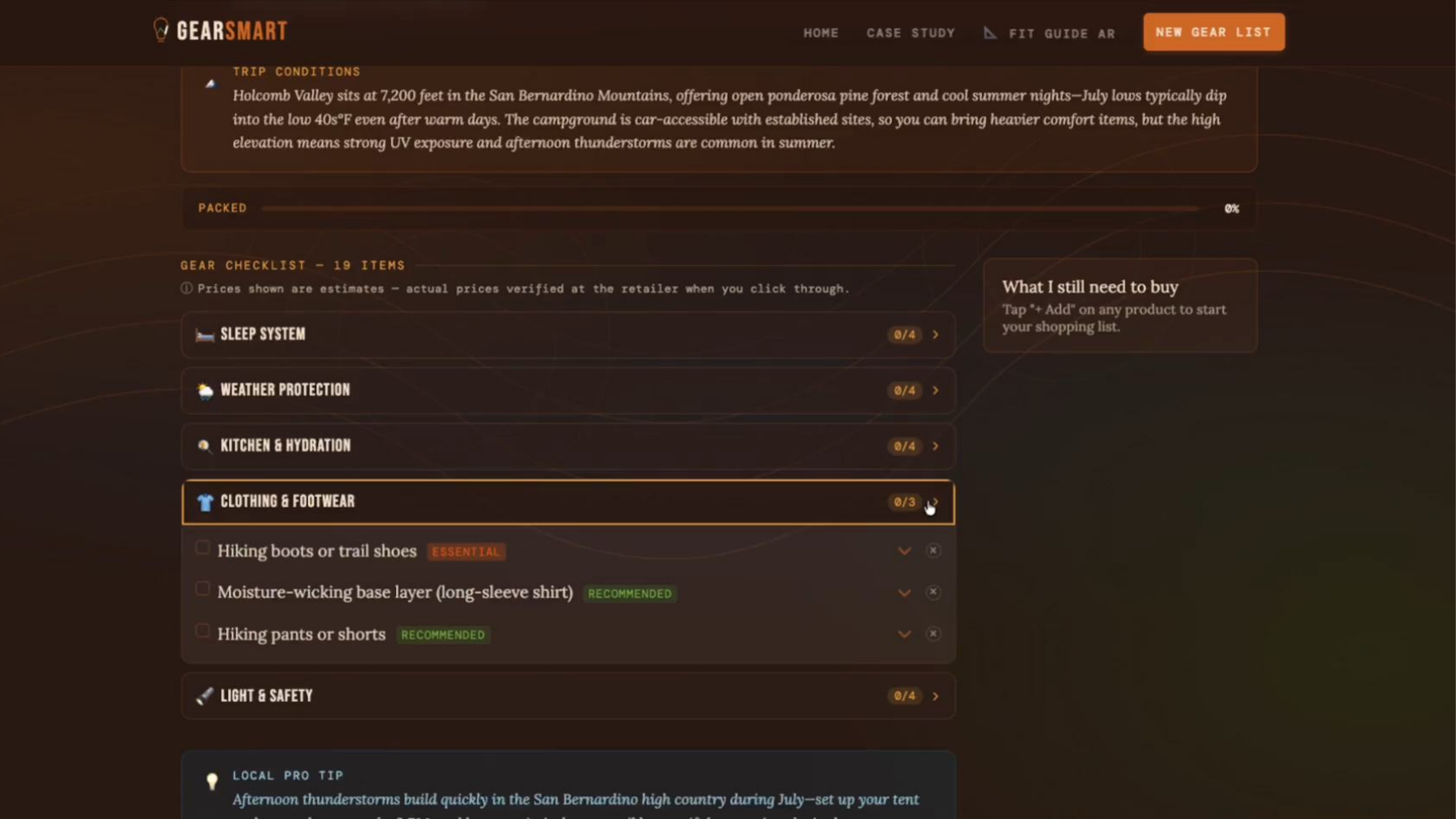
Participants described real anxiety from flat lists where everything felt equally important. "Essential" badges create a clear hierarchy — what you can't leave behind, separate from what's a nice upgrade. A progress bar turns packing from a stressful task into something completable. Both patterns came straight from the affinity clusters.
Addresses — Specificity Gap
Each item expands to explain why it's on your list for this trip. The reasoning is the product — it's what turns a checklist into advice.
Addresses — Cost Intimidation
Knowing what to buy is half the problem; knowing where to start — and trusting the price — is the other half. GearSmart routes each item to whichever trusted retailer sells it cheapest, rather than locking to one store. (The story behind that decision is in the next section.)
Section 05
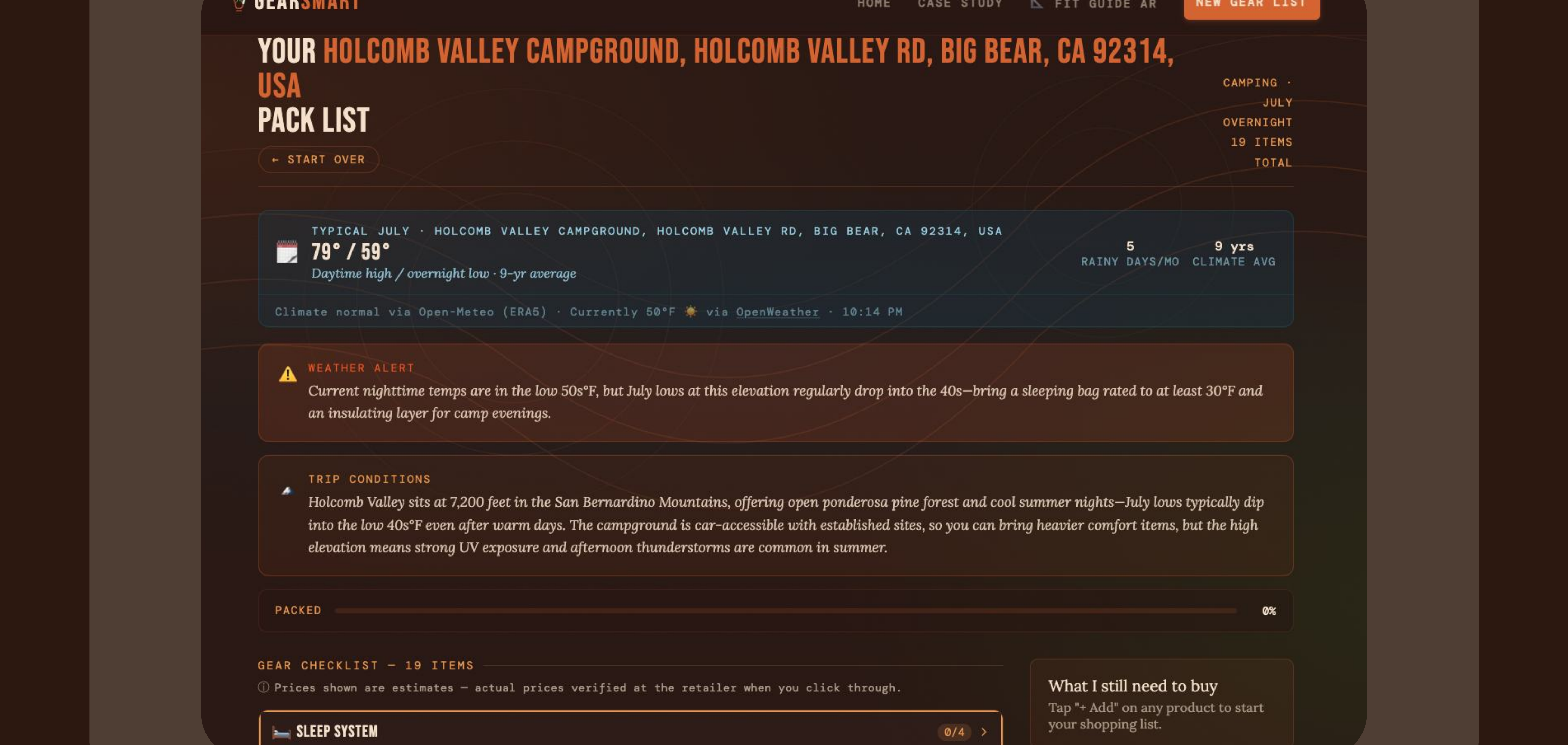
GearSmart is a live, deployed product, not a mockup. You type your trip; the site quietly asks three services — a weather feed, an AI advisor, and a price finder — and hands back a list built for your trip, with a reason for every item and a link to buy each at the best price.
The Pivot
I applied to REI's affiliate program to monetize the product links. REI rejected the application. Instead of tying the product to one store, I rebuilt the entire purchase layer to be retailer-agnostic: it searches across trusted outdoor retailers — REI, Backcountry, Patagonia, Black Diamond, The North Face, Moosejaw, Evo — and routes you to whoever sells each item cheapest. The rejection made the product better.
"GearSmart isn't tied to one retailer's inventory — we recommend the right gear and send you to whoever sells it."
The path wasn't clean, either: a key shopping API was deprecated mid-build, forcing a migration to a different engine to keep direct-to-retailer links working.
Hardening
Shipping to real users meant hardening it. The first version leaked API keys in the browser and broke when the AI returned malformed data. I moved every secret server-side, rotated the exposed keys, replaced fragile text parsing with the AI's structured tool-use so invalid output is now impossible, added a graceful retry so users see "trying again" instead of an error, and set hard spending caps. The judgment behind those choices — not the speed of building — is the design.
Architecture: Browser → Vercel functions → weather, AI gear list, and price routing → back to a single trip-specific list. The map stays in the browser, locked to this site.
Section 06
The strongest design decisions were the ones I walked back. Three features I built, tested, and pulled:
Walk-back 01
Designed: multiply gear cost by group size in the cart.
Learned: a four-person list showing $1,200+ per person reads as terrifying,
and it muddied the single-user cart.
Replaced with: a quiet "shared" tag on group gear, and a cart that stays
personal.
Walk-back 02
Designed: hover to reveal why an item's on your list.
Tested: it clipped on the first item, and hover doesn't translate to touch.
Replaced with: a tap-to-expand row that carries the reasoning — which became
one of the product's best features.
Walk-back 03
Designed: a dedicated solo switch.
Learned: it was redundant.
Replaced with: solo simply derives from a group size of one. One less
control.
Each removal made the product simpler. Showing them is the point — design maturity is knowing what to cut.
Section 07
Real beginners. The Ladies Climbing Coalition sessions shaped the product before I built it; a later round of remote testing with beginners shaped the refinements. One tester described GearSmart as "a knowledgeable, generous friend." Rhys Newman's note that "beginner / intermediate / expert is too vague" is what drove the calibration work.
Industry reviewers. A panel of working designers reviewed it: a senior product designer at Patagonia (who started her career as a gear-store sales associate — literally the friend GearSmart digitizes), a designer on Adobe's Spectrum design system, and a human-factors product researcher. The Patagonia reviewer called the carabiner-and-light-bulb logo "ingenious" and the budget step "really smart, because outdoor gear is really expensive," and handed me a product roadmap: show pack weight as you pack, add a sustainability rating for the conscious consumer, and build a borrowing community. The Adobe reviewer pushed on visual restraint and on making the human design judgment visible behind an AI-built prototype — a note I've carried into this case study.
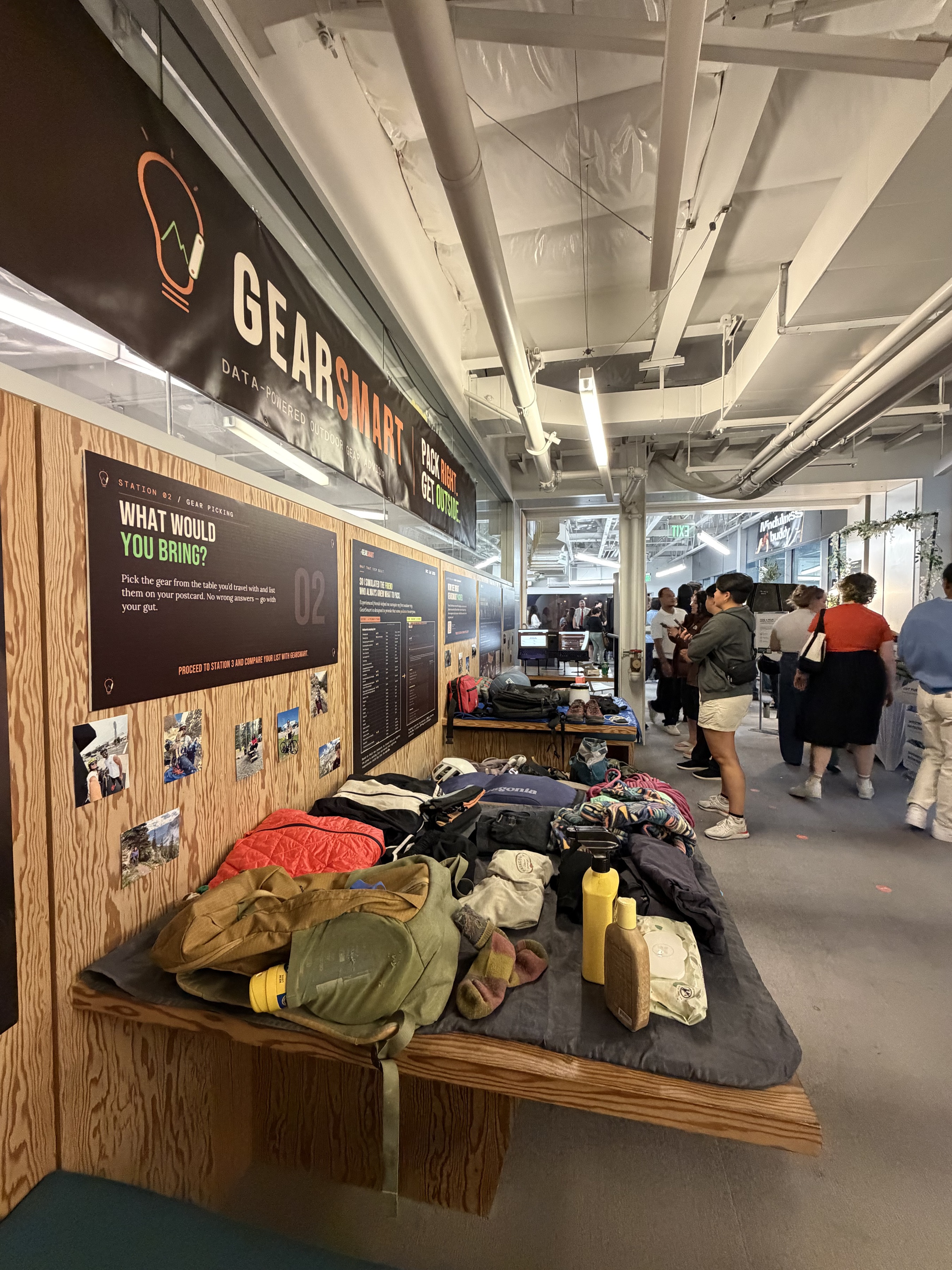
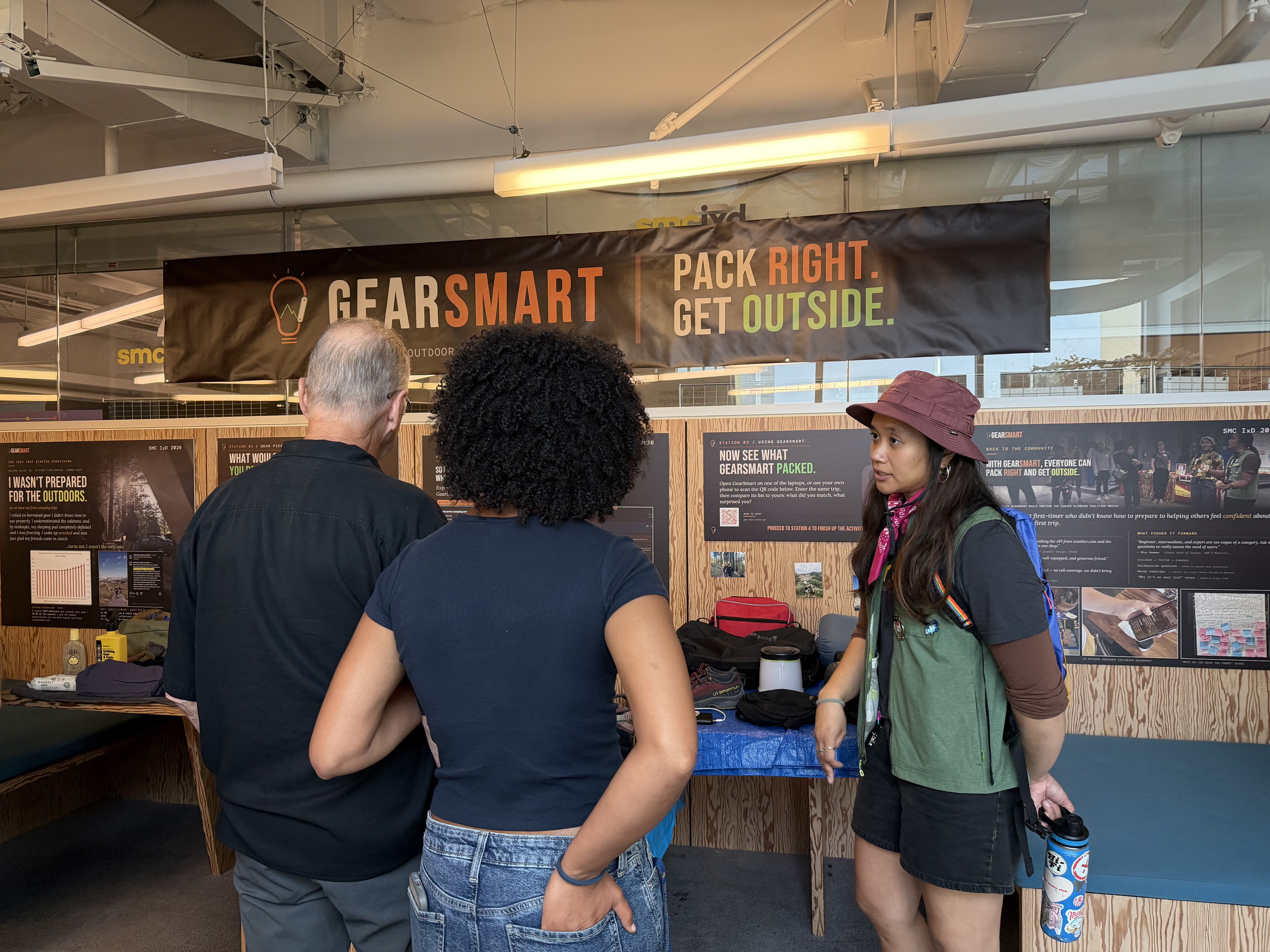
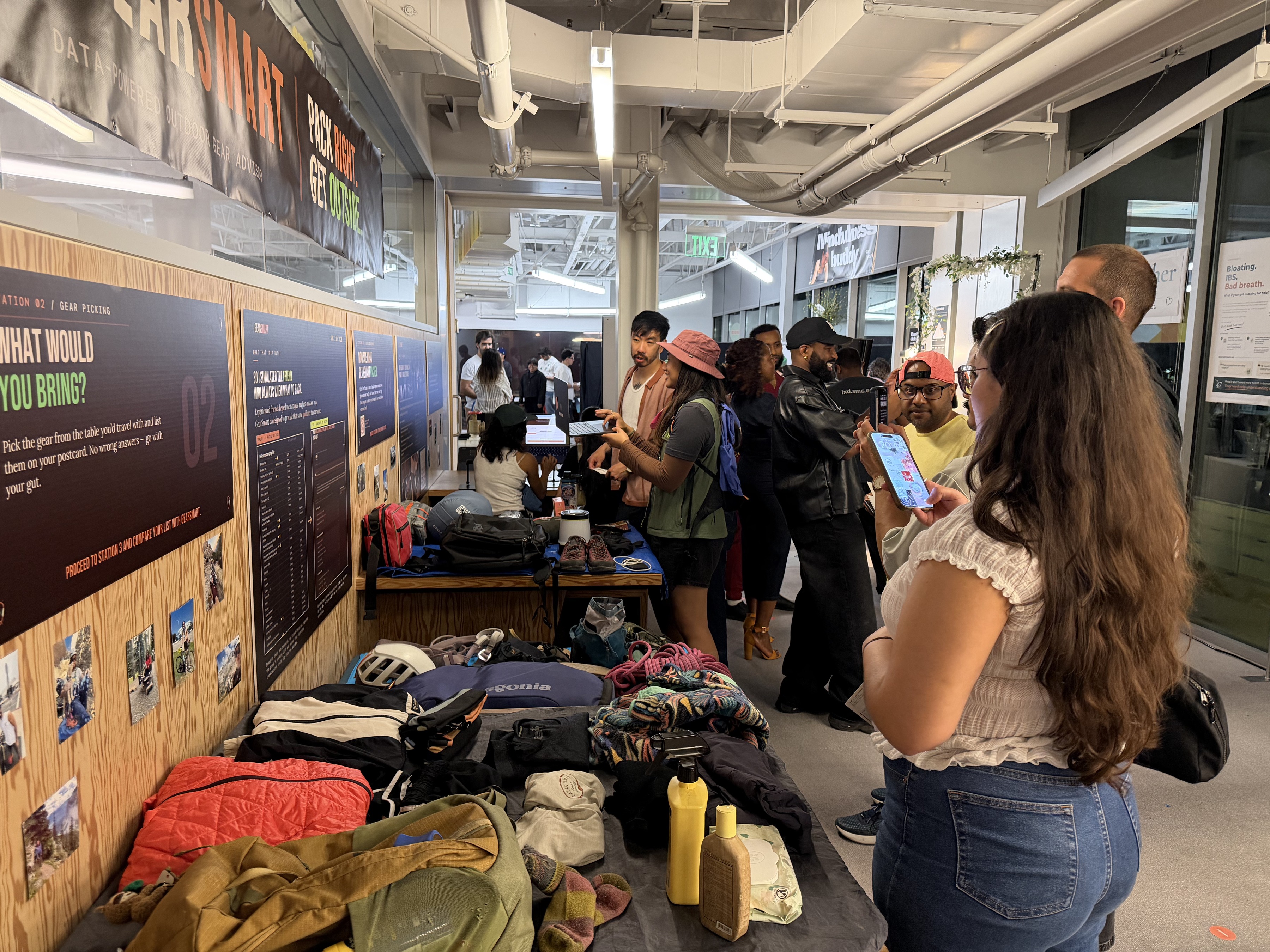
The public. At the senior exhibition, visitors walked a four-table flow — "Four Tables, One Conversation" — pulling a scenario card, packing a kit from their own guesses, then typing the same trip into GearSmart and watching a researched list build beside their guess. The gap between guessing and knowing, made physical.
It's genius that you started pulling the API from weather and from the vendors to bring everything into one shop.
— Sam Anvari, advisor
Section 08
The current version proves the concept. The roadmap is shaped by what testers and reviewers asked for.
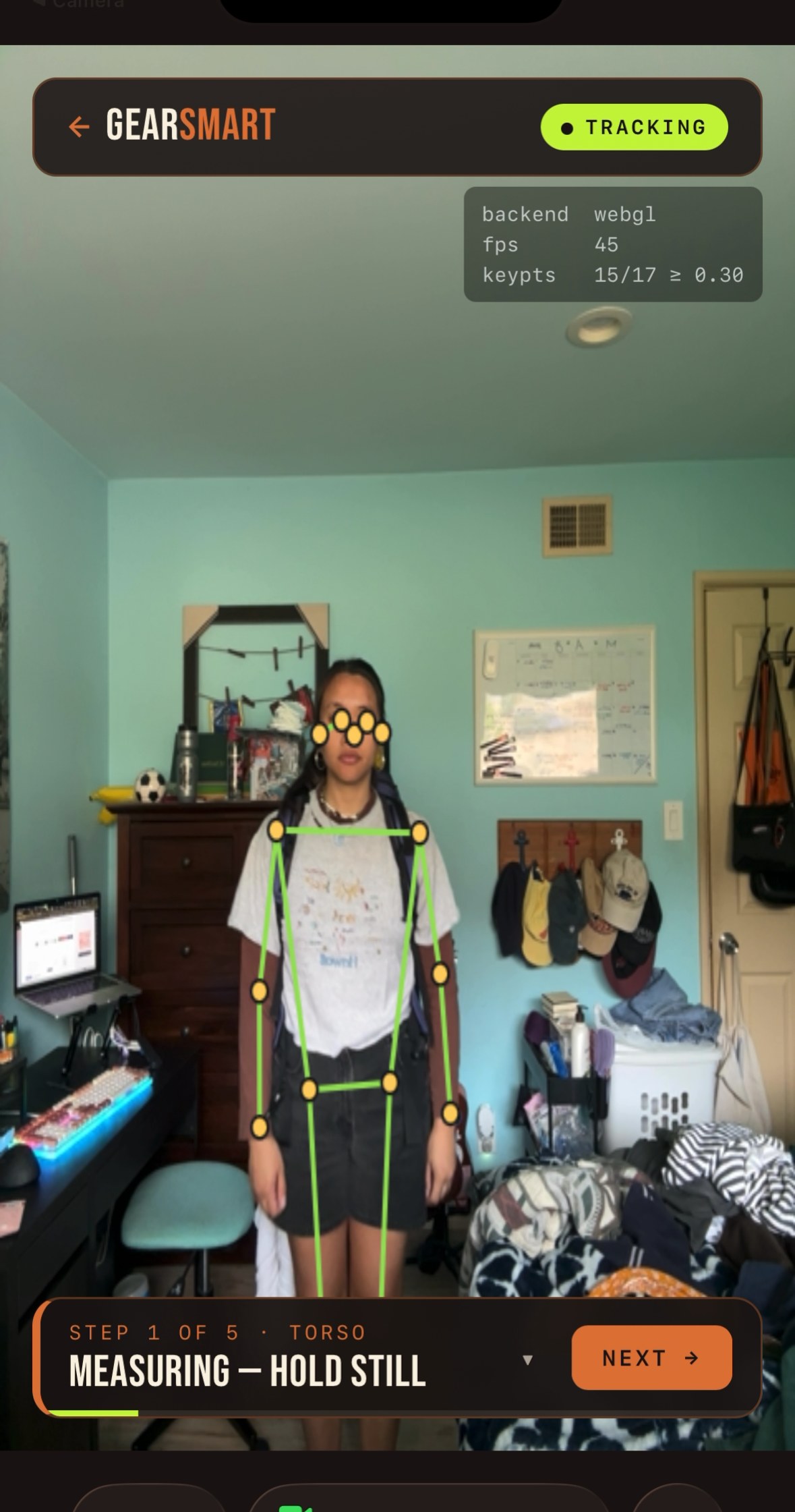
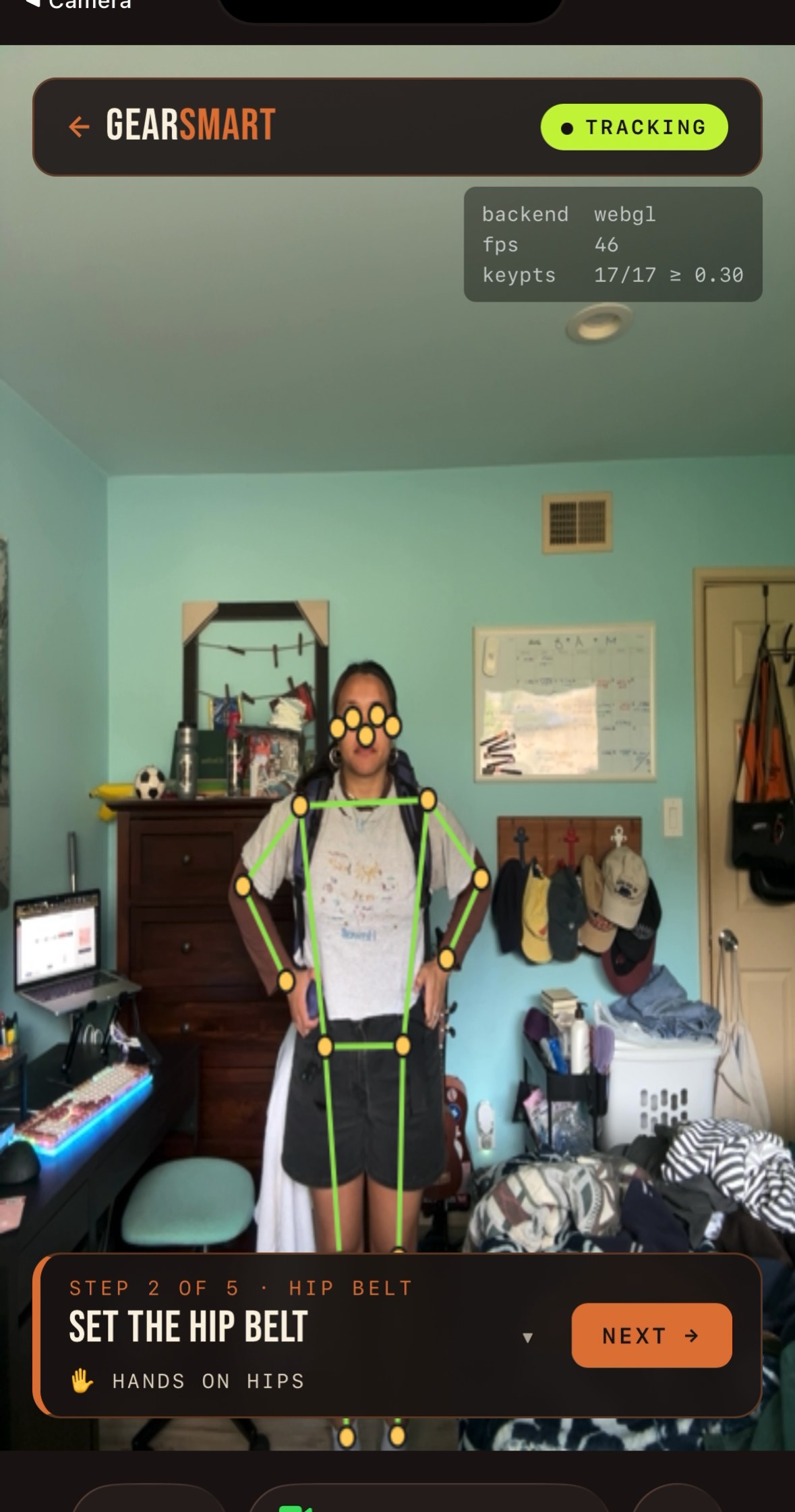
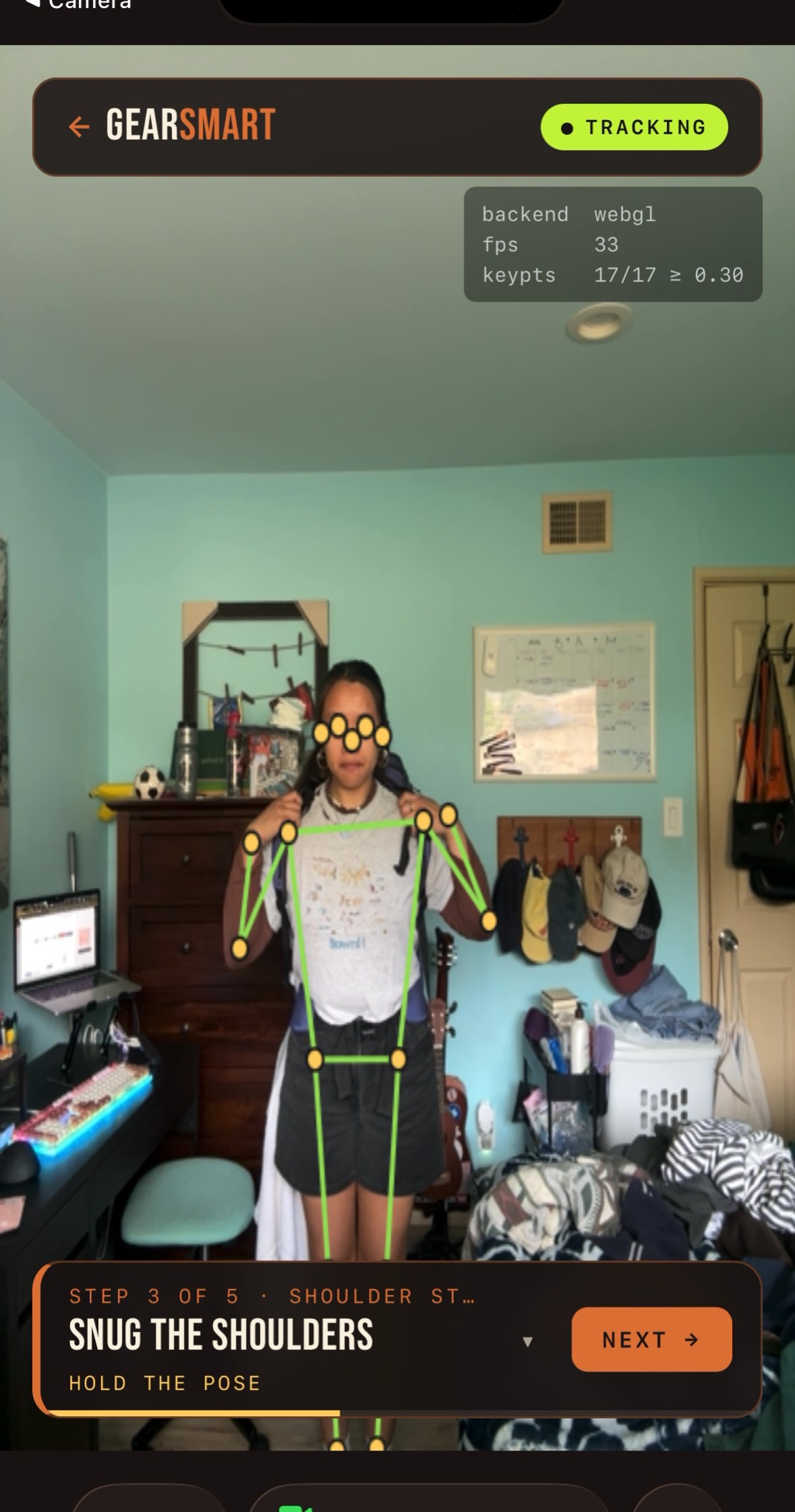
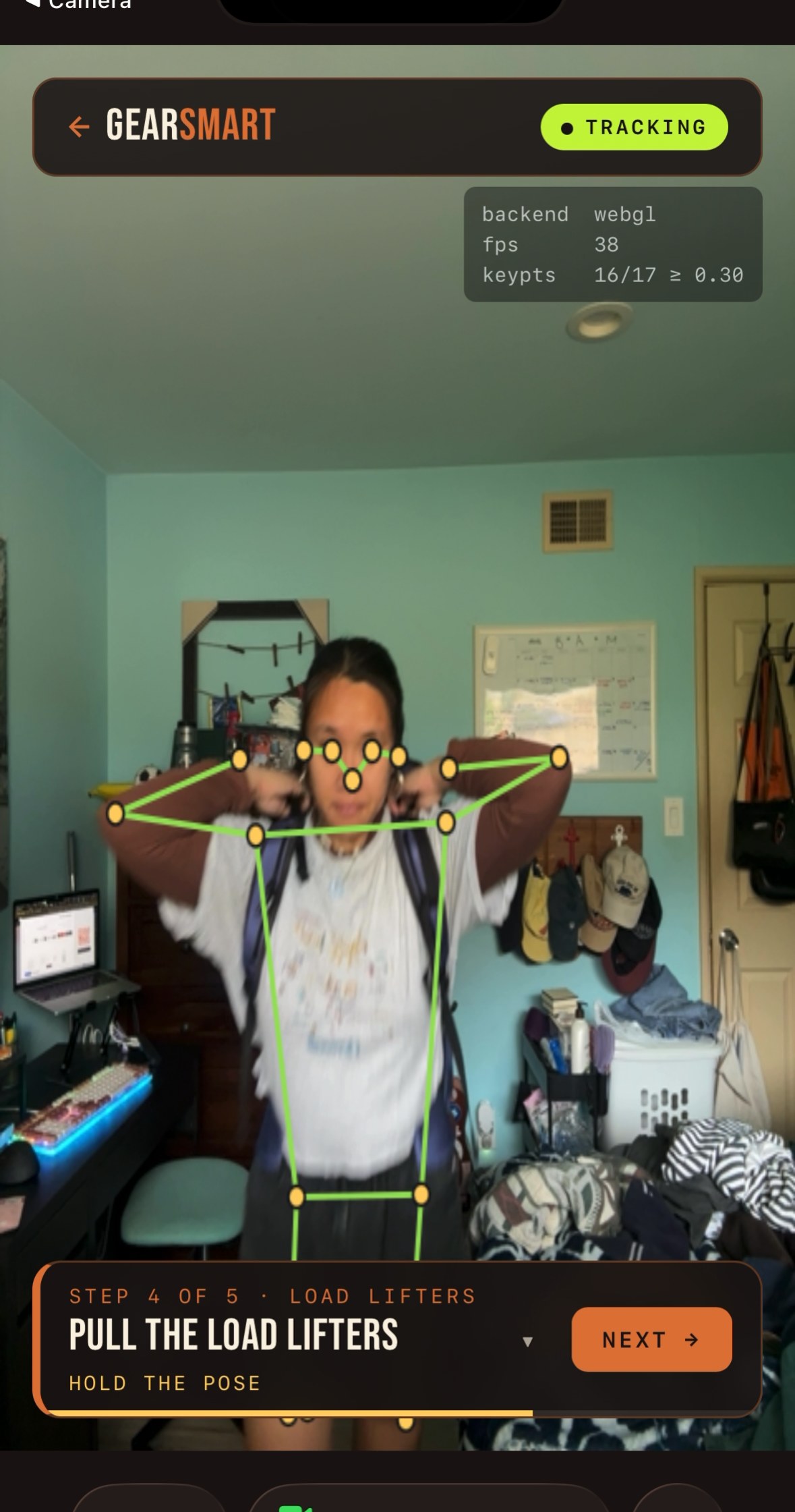
Live and deployed: trip-specific lists, calibrated experience levels, group and solo trips, retailer-agnostic price routing, and an AR Fit Guide that coaches you through fitting a backpack correctly once it's on the list.
A running pack-weight total beside the price total, a °C/°F toggle, durable caching and rate limiting, and forecast-based weather so a trip months out reflects the conditions you'll actually face.
A sustainability rating built on verifiable signals, not a made-up score — surfacing real certifications and take-back programs so the conscious consumer can choose well. Pack weight that changes which pack gets recommended. Expanded activities beyond hiking, camping, backpacking, climbing, and skiing.
Saved lists and return trips, a post-trip feedback loop so the tool learns what you actually used, and a borrowing community so the most responsible option — borrow before you buy — is built into the product.
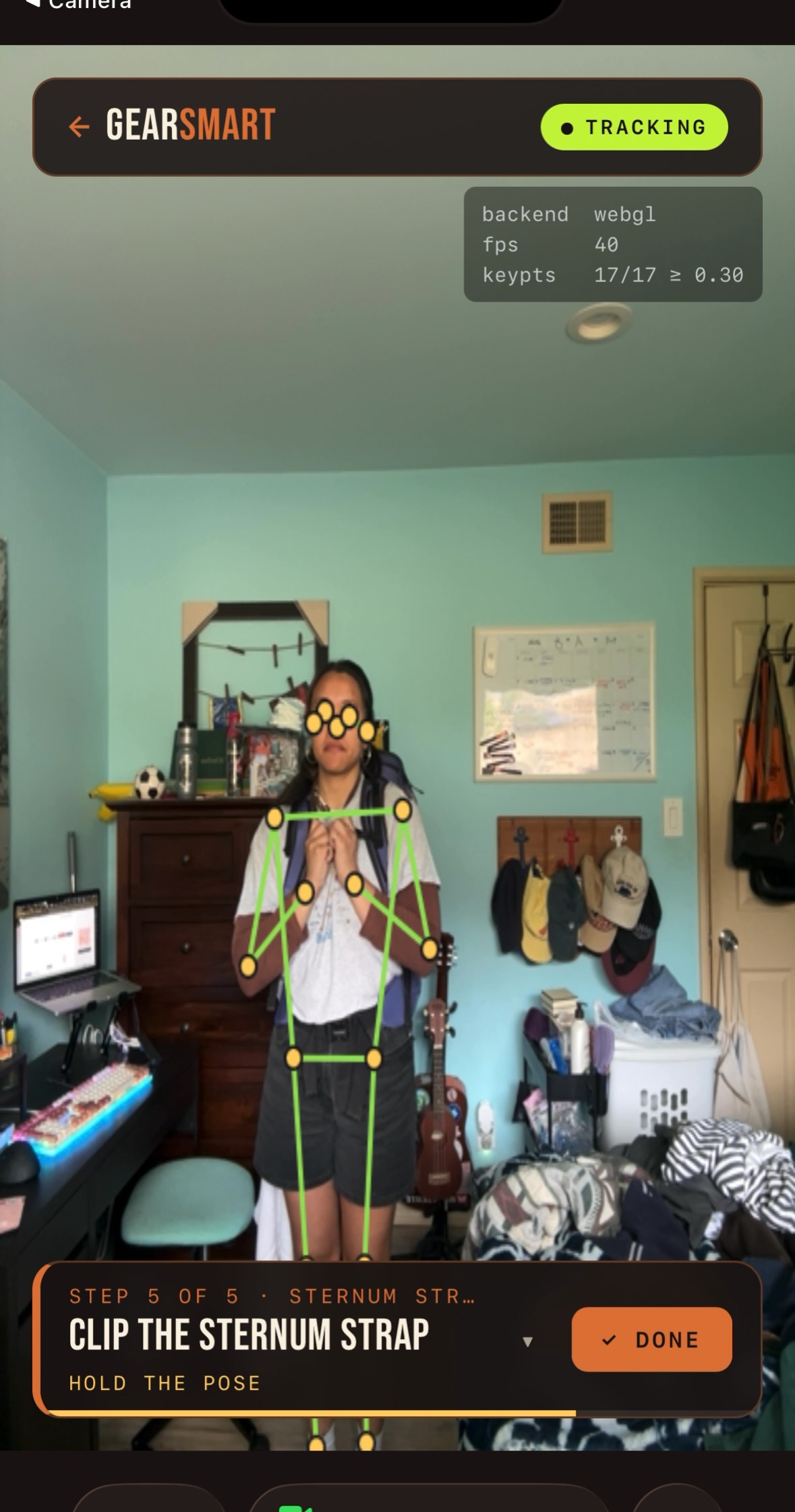
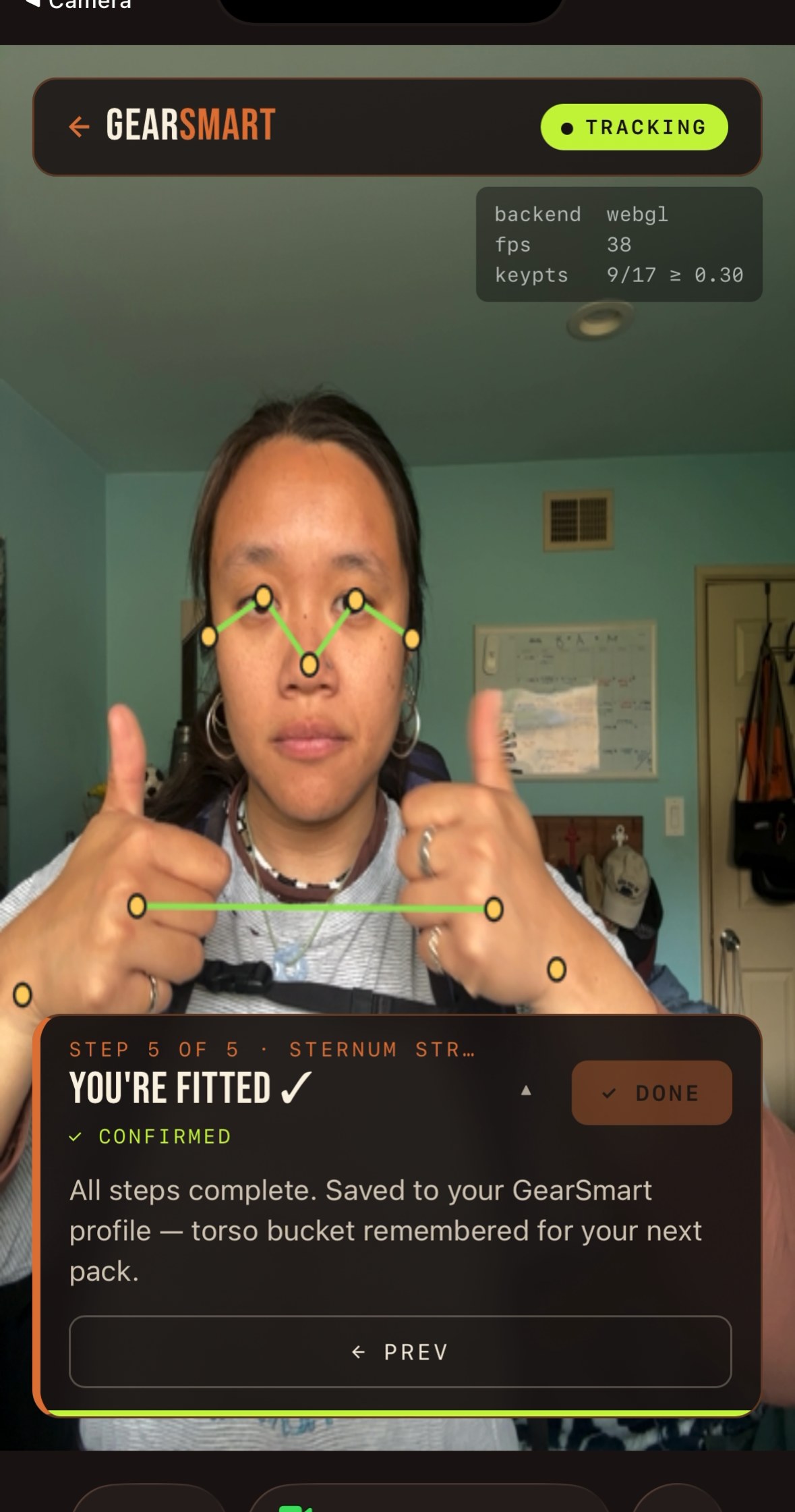
Getting the gear is only half of it. GearSmart's AR Fit Guide walks you through fitting a backpack correctly — hip belt, sternum strap, load lifters, shoulder fit, torso length — so the pack you bought actually works on your body.
Reflection
GearSmart taught me what AI is good for as a design material: speed. It let me build and test in days instead of weeks. But the defensible work is the judgment underneath — framing the real problem (calibration, not gear), designing the reasoning structure, the retailer-agnostic pivot, and testing with real beginners instead of classmates. The tool is the artifact. The judgment is the design.
Tell GearSmart where you're going and get a gear list built for your exact trip.
Build My Gear List →